Episode 147
E147 | The Black Belt Illusion: What Really Changes When You Reach the Top?
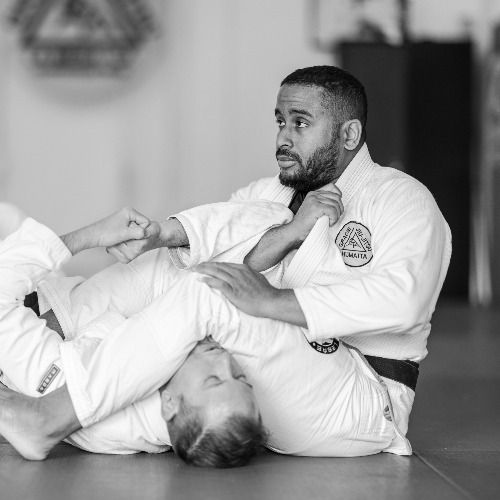
In this episode of Tapped In, David Figueroa Martinez pulls back the curtain on the most coveted milestone in Jiu-Jitsu: the black belt. He deconstructs the "big bang" myth of promotion, exploring the shift from being a student to becoming a lifelong representative of the art. From the heavy mantle of responsibility to the surprising realization that you haven't "arrived," this breakdown is an honest look at the emotional and technical reality of the black belt journey.
3 Key Takeaways
- The Responsibility Shift: Promotion isn't just a reward for skill; it’s a transition into a role where you represent the entire art, requiring a higher level of emotional intelligence and a commitment to helping others.
- The "Flipped Game" Reality: Much like beating an old-school video game only to start over with harder enemies, a black belt reveals how much you still don't know and the importance of remaining a student.
- Humanizing the Rank: Maintaining transparency about insecurities and losses (like giving your belt to a student who submits you) is essential to breaking the "superpower" myth and fostering a healthy gym culture.
Chapters
- 0:00 – The Promotion Moment: Expectations vs. Reality
- 2:45 – The Shift in Responsibility and "Celebrity" Status
- 6:15 – Representing the Art: No More "Bad Days"
- 9:50 – The Illusion of Arrival and the Mario "Flipped Game" Analogy
- 13:20 – Facing Insecurities and Learning from White Belts
- 17:05 – Evolving as a Teacher: The Power of Simplification
- 21:40 – Creating a Legacy of Good People, Not Just Champions
Are You You New To The Podcast? Start Here!
DFM Coaching Skool Community
Join the freemium DFM Coaching Skool Community, the space where the conversation continues after the episode ends. Mindset tools, mat culture, and a community of grapplers who take the mental side seriously.
👉 DFM Coaching | Bjj Skool Community.
DFM Coaching In Person and Remote Coaching
DFM Coaching works with recreational grapplers who want to get better and actually feel it. Remote coaching and in person seminars available.
Stay Connected
🌐 www.DFMCoachingBjj.com
DFM Coaching | Bjj Blog:
Long-form storytelling, deep strategy, and the philosophy behind the fight:
Affiliate Partner
BJJ Mental Models has one of the deepest conceptual Jiu-Jitsu libraries out there. I use it. I recommend it.
(Code: FIGUEROAMARTINEZ)
Help the Show Grow
If this episode gave you something, pass it on. Share it with a training partner, drop a review, or repost it to your story. That is how we keep the signal strong.
Stay tapped in,
David Figueroa-Martinez
Founder, DFM Coaching Bjj
Mentioned in this episode:
Patreon Blueprint Ad
Transcript
Episode: The Black Belt Illusion
[0:00] Welcome to Tapped In. My name is David Figueroa Martinez, and today we're going to be discussing the black belt illusion—what really happens when you get promoted. And this is going to be specific to me, and I'm not speaking for everyone who gets promoted, but the things that I kind of felt and experienced now, I think almost four years in, three and a half, whatever it might be.
[0:32] There's this moment where you get called up to get your black belt and, if you're lucky, everyone's applauding and everyone's excited for you. It’s a massive accomplishment. It feels like it’s going to be life-changing. You have dedicated however much time—most people 10 to 12 years—to get to this point.
[1:03] Getting to your black belt is a massive accomplishment, and it shouldn't be ignored, it shouldn't be glossed over, it shouldn't be simplified. But at the same time, it's not this big moment that people kind of think it is. Nothing really drastically changes after that moment. You do have encounters that shift. You do have a new title; people will probably call you professor. People look at you a little different, but nothing really changes within your life.
[1:36] When I got called up and I got my black belt, I had this moment of all these things going through my head. Similar to the idea where you are dying and everything flashes before your eyes. There wasn't any one moment that was clear enough to look at or remember or process, but it was just like a shift of a bunch of things all at once.
[2:07] There's this weight that almost feels like it comes off a little bit, where all the struggles that you went through and everything that you had to endure and push through and overcome and figure out—all the injuries, all the mistakes, all the shitty moments—just kind of fly by in a moment, and you feel them all at once. That’s how I felt.
[2:46] In doing that, I felt like I was starting to get a little bit emotional. It did not come out in the form of tears, but I think the majority of us who get to that point probably would cry. It was different than any other promotion because, in essence, it's your last.
[3:20] Standing there as your professor says some kind of words, people are cheering, people are recording, and they're strapping that belt onto you, it feels like the other promotions but it also feels different. It feels like a culmination. It feels like "I'm done, I got to the finish line." But in reality, after you get your first couple of rolls in, nothing else really changes about you unless you allow it to change you.
[4:05] I found that the responsibility shifted a bit. That's not saying that I didn't hold responsibilities beforehand, because I had been teaching in some capacity since I was a blue belt. One of the things my professor said at the time of my promotion was "this guy, he has been acting like a black belt long before he even got to this point".
[4:51] I had spent a lot of time studying my coaches and how they taught. I had spent a lot of time correcting, I had spent a lot of time in roles that allowed me to carry some kind of responsibility. So by the time I got to black belt, I wasn't out of my depth. But black belt gives a different level of responsibility because everyone's looking to you for that guidance and that correction. They're looking to you as the role model.
[5:32] When you're a brown belt, they look at you similarly, but at black belt, it's just a different gaze. They expect you to know everything. They expect you to have it all together. It’s almost like being a celebrity in a sense, where you can make or break someone's day.
[6:14] I feel like I can never have a bad day. And in a "bad day," I mean taking my frustrations out on someone else because I came in from a stressful work environment and I was short with somebody. I can't have those moments. You are now a representative of the art. You’re not just a student; you’re not just someone who has been training for eight or nine years; you're now a black belt of Jiu-Jitsu.
[7:13] You have to carry that mantle everywhere you go. You’re not just a representative of your gym or your instructor; you're a representative of the art. I’ve had to work on certain things for myself because I understand that at some point, this person who comes in may not have even seen a black belt yet.
[8:01] I found that I feel like I have to help people more. There's a weight of "now it's time to give back". So I go out of my way to assist, I go out of my way to answer questions. As a purple or brown belt, sometimes I would worry "they don't want my opinion," but now I'll see something and more often than not, I might chime in.
[8:48] There's also this idea that you know everything. Part of the responsibility is being honest and admitting, "Hey, this isn't my forte, this isn't the subject that I really know". It’s your responsibility to be genuine, to help people, and to give back.
[9:30] There's also what I mentioned before: this weird view of "I've arrived". You have not arrived. There is no arrival. There’s no superpower. It feels more like when you beat Mario and you "flip" the game, and you redo it and some of the characters have changed. That’s what happens when you get your black belt.
[: [: [: [: [: [: [: [: [: [: [: [: [: [: [: [: [: [: [: